Labyrinth is a deception-based cybersecurity company that turns the tables on attackers by creating sophisticated decoy environments. Their technology wastes hackers' time and resources while gathering intelligence on their tactics, transforming cyber defense from a passive shield into an active countermeasure.
Featured Episode
Guest
Pawel Rybczyk & Anastasiia Dorosh
CEO / Cybersecurity Implementation Lead
Inside the Maze: How Labyrinth Is Trolling Hackers and Changing Cyber Defense
November 13, 2025
45 min
Season 1 • Episode 3
Key Takeaways
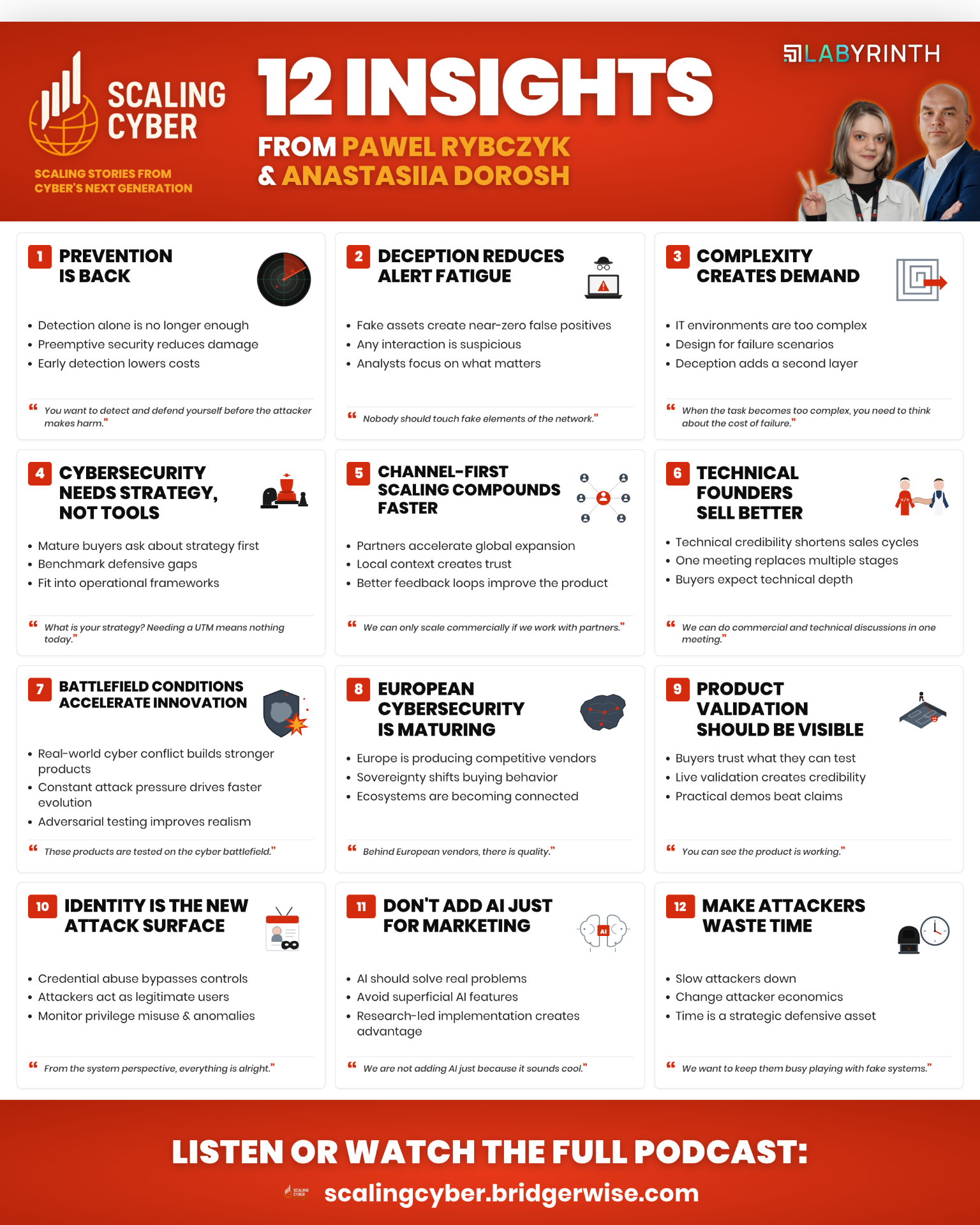
•Deception technology is not just honeypots — Labyrinth deploys a distributed network of decoy assets inside your production environment, indistinguishable from real systems. No legitimate user or process should ever touch them — the moment anything does, the alert is real. Zero false positives by design.
•There's a second phase most people don't know about: the engagement. Once an attacker touches a decoy, Labyrinth keeps them busy inside fake systems, diverts them from real assets, and buys defenders time. Attackers enter a labyrinth with no exit — they waste time and reveal their techniques while the organization loses nothing.
•Labyrinth catches identity-driven attacks that bypass almost every other control. Credential-based intrusions look legitimate to firewalls, EDRs, and IAM tools. Labyrinth catches them the instant they probe a decoy — credentials don't matter.
•Labyrinth validates your entire security strategy, not just its own alerts. Like a smoke detector for your network, it reveals how far attackers got before being caught — exposing where other defenses failed. Gartner calls this preemptive cybersecurity and projects it will grow from ~5% to ~50% of security strategies by 2030.
•The product is tested on a real cyber battlefield, not in a lab. Founded in Ukraine and headquartered in Poland, the team has operated in active cyber conflict environments. Labyrinth's credibility comes from proven deployments in genuinely hostile environments, not analyst rankings.
What if, instead of chasing cybercriminals… you made them lose time and chase ghosts?