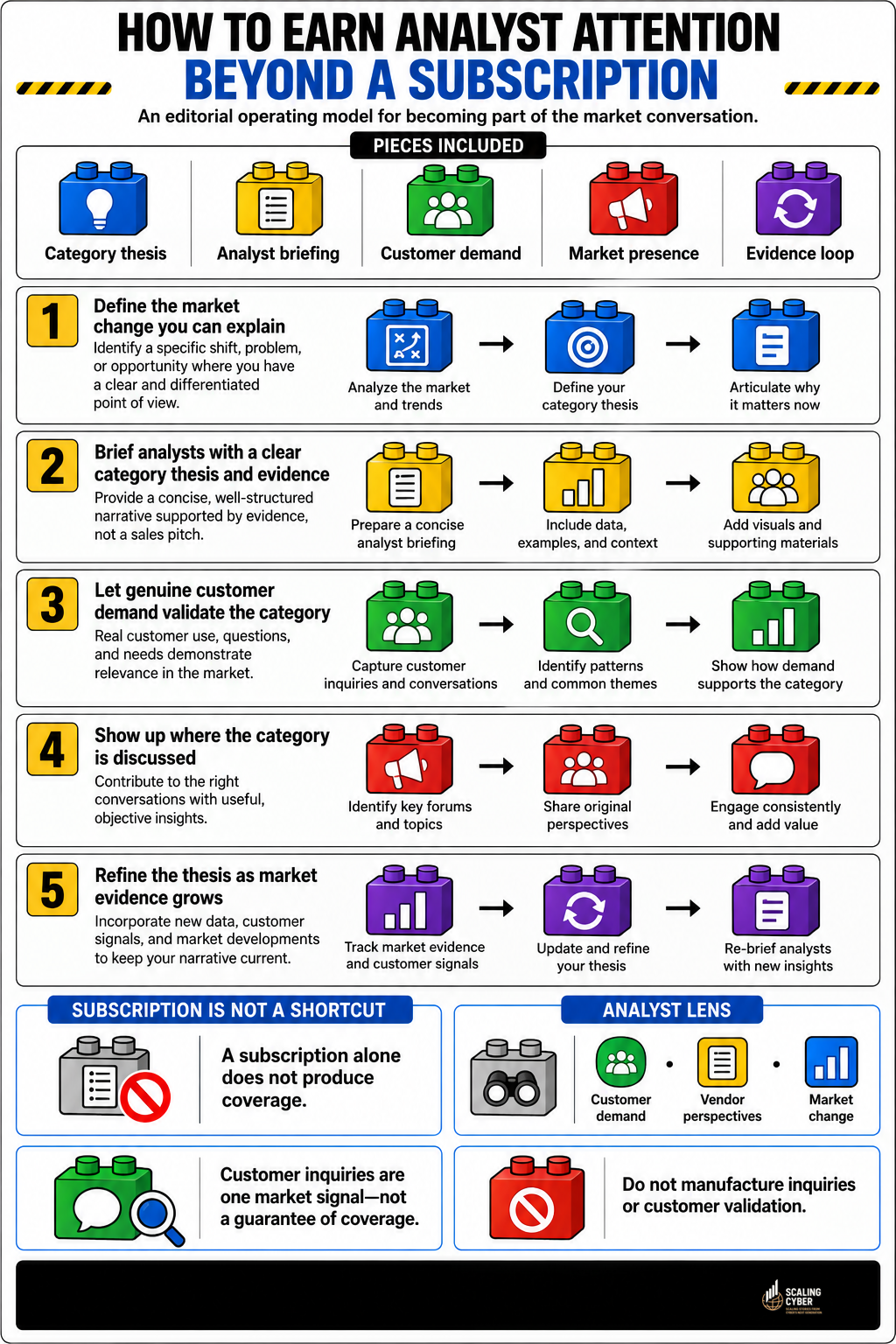
For many cybersecurity founders, industry analysts feel like a black box, expensive, inaccessible, and seemingly reserved for companies with larger budgets or more traction. But as Luigi Lenguito, CEO of BforeAI, shares in this episode of Scaling Cyber, there's a practical, low-cost path to analyst engagement, and it doesn't require paying for expensive subscriptions or magic bullet introductions.
Early analyst visibility in cybersecurity
For startups selling to mid-market and large enterprises, analyst presence isn't optional, it's part of the sales process. Procurement teams routinely ask:
- "Are you mentioned by analysts?"
- "Are you covered in market guides?"
- "What's the analyst perspective on this category?"
If you don't have answers, you're already behind.
Luigi's approach: start early. Even before hitting $10M ARR, his team began engaging with analysts through events like RSA and Black Hat, introducing themselves, scheduling briefings, and positioning BforeAI as part of the emerging predictive intelligence category.
Analysts don't create markets, they observe momentum
One of the most important reframes in this conversation is how analysts actually work. They don't invent categories, they watch where innovation clusters. When they see enough companies, funding, and customer activity around a theme, they begin researching and covering it.
That means your job isn't to convince analysts you're worth watching. Your job is to be part of the momentum, to be included when they do look. If you've briefed them before, if your name shows up in competitor slides and customer interviews, you're already ahead.
What Gartner Peer Insights unlocks (without a subscription)
Luigi recommends Gartner Peer Insights as a practical starting point for early-stage companies. It's free. It's curated. And when customers leave detailed reviews, it creates a secondary signal that analysts may pick up.
His tactic: ask one or two happy customers, ideally larger enterprises, to leave substantive reviews. These reviews don't just influence procurement. They also build the foundation for analyst awareness.
Final thought: Presence compounds over time
Analyst relationships aren't built overnight. But every briefing, every customer review, every event interaction adds up. As Luigi puts it, you want to be "part of the landscape", visible enough that when the market shifts, your name is already in the conversation.
For cybersecurity founders thinking long-term, you compete with better-funded players by showing up consistently rather than outspending them on analyst fees.